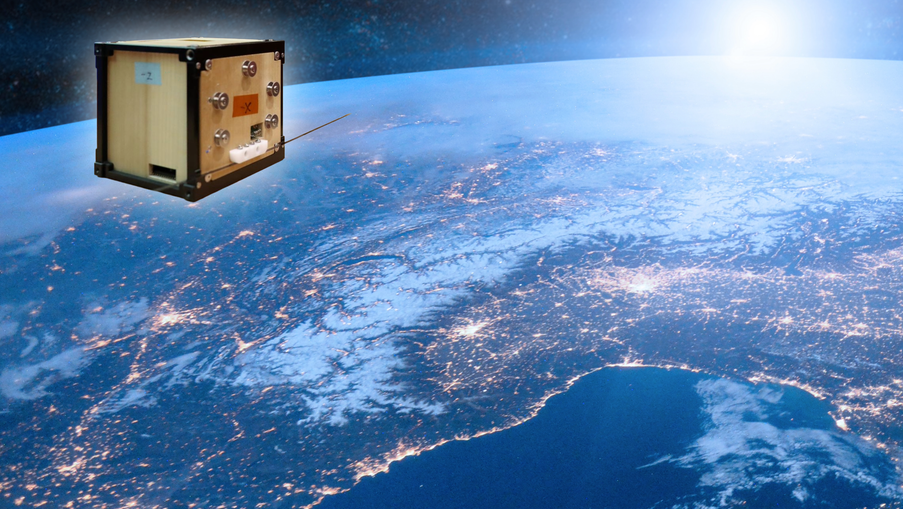
Developed by researchers at Kyoto University in partnership with JAXA, LignoSat became the very first wooden satellite to enter earths orbit.
In an effort to tackle the growing problem of space debris caused by conventional aluminium satellites breaking up during re-entry, Japanese researchers have developed the world’s first wooden satellite, known as LignoSat.

LignoSat, a small wooden cube, constructed using traditional Japanese joinery contains no screws or adhesives, is designed to burn up completely upon re-entry to the earths atmosphere.
First launched in November 2024 and deployed from the International Space Station (ISS) in December 2024, the 900g satellite aimed to prove timber as a sustainable and eco-friendly alternative metal.

The timber of choice: Magnolia.
Known and valued for it's structural strength, workability and dimensional stability, Magnolia proved a suitable choice.
Native to both the Americas and East Asia - including Japan, which is particularly valued for strength - Magnolia trees thrives in temperate climates with moderate rainfall and well draining soil. Whilst Magnolia isn't as dense or strong as as hardwoods like oak, it's balanced growth rate ensures sufficient strength and dimensional stability.

As of February 2026, the LignoSat mission has proved that a wooden satellite can survive the stresses of launch and the harsh environments of space, and despite failures with communications, the team at Kyoto University described the mission as a "wonderful demonstration" [of woods potential].
LignoSat-2 is already in the planning. Watch this space.