Timber Cladding
Duffield Timber is a UK timber cladding supplier based in Melmerby, North Yorkshire, established in 1957. We supply 8+ species, 10+ profiles, and factory coatings including Burnblock® fire retardant, UK-wide and internationally.
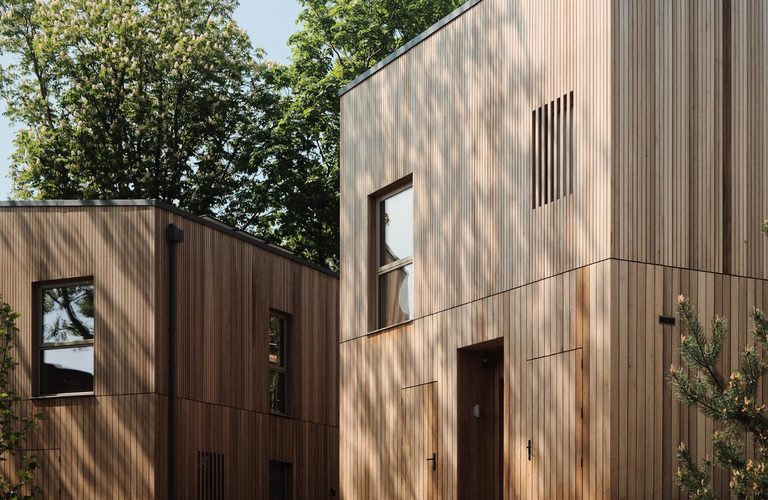
Cladding Species


Coated Cladding
Fully certified fire retardant timber with a colour coating, in one single treatment system.


Charred look cladding with a robust, textured finish.

High-performance UV protection in a range of colours.

Pre-weathered wood protection using silicon technology for enhanced performance.


Cladding Profiles


Duffield Timber is a UK timber cladding supplier and machining specialist
Based in Melmerby, North Yorkshire, established in 1957. We supply cladding in 8 timber species: Western Red Cedar, Siberian Larch, Thermo-Ayous, Thermo-Nordic Pine, Thermo-Tulipwood CAMBIA®, Alaskan Yellow Cedar, Accoya®, and Painted Whitewood. We machine 6 profile types and finish our cladding with factory coatings including Burnblock® fire retardant, Colourflex®, Chartex®, SiOO:X, and TEKNOCLAD. Products are supplied UK-wide and internationally.
Species Duffield Timber cladding is available in Western Red Cedar, Siberian Larch, Thermo-Ayous, Thermo-Nordic Pine, Thermo-Tulipwood CAMBIA®, Alaskan Yellow Cedar, Accoya®, and Painted Whitewood.
Profiles 13 cladding profiles are available: V-groove (DTC2, DTC3), vertical shadow gap (DTC14, DTC15) , horizontal shadow gap (DTC18, DTC19), featheredge (DTC25), rainscreen (DTC27, DTC28), double vertical shadow gap (DTC47), triple vertical shadow gap (DTC48), square edged open (DTC49), deep shadow gap (DTC50) and angle bead. All profiles are machined in-house to your specification, including bespoke profiles on request.
Coatings and fire treatment Factory-applied finishes include TEKNOCLAD waterborne silver-grey coatings, SiOO:X pre-weathered silicon protection, Colourflex® UV-resistant colour coatings, Chartex® charred-effect finishes, and Burnblock® fire-retardant treatment (Euroclass B, B-s1,d0 to EN 13501-1), available combined with Remmers factory colour coating.
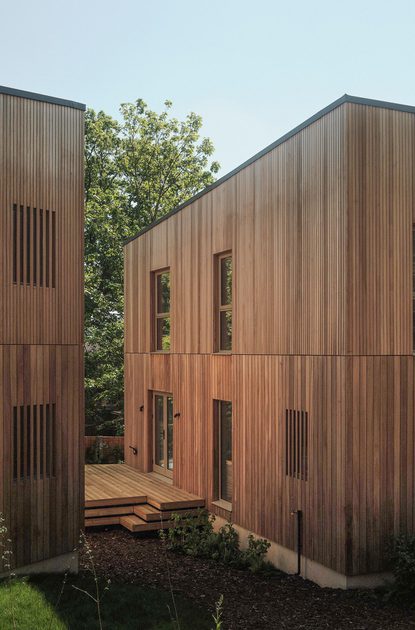
Project inspiration


Cladding frequently asked questions
Cladding is a non-structural wall covering (or facade) for the exterior or interior of a building.
It can give weather protection, insulation and aesthetic appeal. External cladding acts like a 'skin', covering the structural framework of a building.
It can be made from a range of materials, most popularly timber, which is machined to a range of profiles.
Yes, you can paint metal, composite and timber cladding. This includes cedar and larch, which can also be treated with a wood stain or UV oil.
A more high-performance and aesthetically-pleasing option may be to choose a factory coating, where the colour is professionally altered during the product manufacture.
Read more:
If installed properly with a breather membrane and timber battens, no – the cladding will have enough room to breathe and allow for airflow. This will eliminate any risk of moisture buildup.
The standard thickness for timber cladding is 20mm.
For some unique profiles like loglap, this can range up to 40mm.
Yes. Burnblock® is highly effective with all of our timber cladding products.
Cladding is typically designed in a consistent shape and style, with its appearance varying greatly depending on the material used.
Popular timber species include western red cedar, which boasts a classic reddish-brown and salmon pink colour, as well as Thermo-ayous, which has clear-grade mid-to-dark-brown tones. However, factory-applied coatings can give the timber any colour, from ‘charred look’ black to blue.
The profile that the timber cladding boards are machined to also impact appearance. Featheredge gives a classic rural-inspired feel, whilst shadow gap has a sharper, refined look with gaps between the installed boards creating clear lines.
As a result of moisture and the sun’s UV, timber cladding will take on a silvery-grey tone after several months of exposure to the elements.
This is due to breakdown of lignin, a component in the wood. This lignin is then washed away by moisture to leave behind exposed cellulose, which is a grey colour.
The process, called photodegradation, is essentially just a surface phenomenon. It doesn’t mean that the wood is decaying or rotting in any way whatsoever.
If you don’t like the grey look, applying a quality finish or stain can dramatically slow down (and almost halt) the process.
Read more:
Yes, timber cladding has thermal insulating properties.
Wood has tiny air pockets in its matrix-like cellular structure that trap heat and act as a buffer against drastic swings in temperature. This means it resists the transfer of heat, taking on less heat during summer and minimising heat loss during winter.
By acting as a sound-absorbing barrier, cladding also offers limited acoustic insulation properties.
Read more: How sustainable is timber cladding as a building material?
You need to calculate the area you’re wanting to clad in square metres (m²). With square and rectangular spaces, this is done simply by multiplying together the wall dimensions.
To avoid running out of material, it’s always wise to account for a little waste (this is largely the result of cutting and trimming losses).
We’d recommend an extra 10% on top. So, once you’ve calculated the area of the surface with any openings subtracted, multiply your figure by 1.1.
You’ll then choose a product. Top tip: choosing a wider cladding board (with a greater cover size) can reduce your costs.
Read more: How much timber cladding do I need?
A good cladding wood should be durable and stable externally. Some commercially-popular examples include western red cedar, Thermo-ayous, Thermo-pine and Accoya®.
Read more: The best types of exterior wood cladding: your options