Everything we think you might wish to know about wood briquettes.
Basics
Essential need-to-knows about wood briquettes.
Wood briquettes are a type of high-density wood fuel manufactured from compressed wood chippings, sawdust and shavings. ‘Briquette’ originates from French, literally meaning ‘little brick’.
Briquettes are most commonly rectangular or cylindrical, weighing between 1kg and 2kg each, but they can also be octagonal or disk-shaped. The first types of wood briquettes were made in the mid-1800s.
The manufacturing process uses extreme pressure to fuse wood fibres together using the wood’s natural lignin, meaning no chemical binders or glue are used.
They are highly regarded for offering a hotter, longer and cleaner burn compared to traditional firewood. Briquettes produce little ash, making them an eco-friendly option. They also have a more consistent, convenient shape and size.
The compression during manufacture creates an incredibly dense product, around 1g/cm³, which compares to approximately 0.5cm³ for regular firewood. This density means they do not spit, like traditional logs.
Briquettes also have a low moisture content, around 10%, whilst kiln-dried regular firewood is usually 15-20%. This means less energy is wasted from water evaporation during burning.
Some types of briquettes can be ventilated with a central hole, creating a ‘chimney effect’ for a faster, hotter burn.
Read more: Wood fuels FAQs: biomass pellets, briquettes & logs compared
Briquettes are made by compressing wood chippings, shavings and sawdust into a desired shape and density using a high-powered ram.
The compacted material is then fed along a cooling line directly into a cutting and packaging facility. They will be laser-cut using a high-powered saw into the desired length, before being packaged.
Wood briquettes are exposed to high temperatures throughout the production process, lowering the moisture content. This ensures they burn cleanly, minimising the amount of ash produced.
Read more: How are wood briquettes manufactured?
Wood briquettes are hygroscopic, meaning they will absorb moisture from the air if not stored correctly. Made from compacted timber chippings and shavings, wood briquettes must be stored in a dry environment to prevent degradation.
To store wood briquettes:
- Choose a dry, sheltered location, ideally indoors
- Store in the original plastic packaging
- Keep elevated and stacked neatly
Read more: How to light, use and store wood briquettes correctly
Wood briquettes are used as a sustainable, high-performance alternative to traditional firewood, usually for heating in wood-burning stoves, log burners, open fireplaces, chimineas and firepits.
Manufactured from highly-compacted wood sawdust, chippings and savings without binders or glue, briquettes are very dense and dry with minimal ash content.
This means they combust incredibly efficiently, burning hotter and cleaner for longer than regular wood.
Read more: Wood briquettes vs logs: heat and performance comparison
We’d recommend using 2 or 3 briquettes for a standard-sized wood burning stove or log burner.
After the fire has been lit for around 15 minutes and the briquettes are glowing red, you might want to consider adding another briquette.
If you’re used to using traditional firewood, be careful to not overload the burner – because they burn hotter, you need less volume of briquettes to achieve the same heat output.
- Ensure the air vents on your wood burning appliance are open and the firebox is free of ash and debris.
- Place some newspaper and firelighters at the bottom to act as tinder.
- Add some kindling sticks, followed by two or three briquettes around and on top of this pile.
- Ignite the firelighters with a long match or safety lighter.
- Wait for the briquettes to catch fire and generate heat.
Remember that briquettes can expand as they burn, so make sure they aren’t near the vents or glass.
Briquettes can burn easily for at least two hours, but this will also depend on air flow. On most modern appliances, speed of burning and heat release can be managed with the air flow vents. There’s no need to stir the fire while it is burning.
To extinguish the fire, completely close the air vents.
One or two firelighters should be placed at the bottom of a clean, ash-free wood burning appliance.
Arrange a small amount of kindling and a few briquettes over the firelighters, leaving enough room for flames to grow.
The firelighters can then be ignited with a long match or safety lighter.
Once the briquettes have caught fire and are glowing red, you can add more wood fuel – but don’t overload the appliance.
Yes, wood by-products are a popular high-performance, sustainable alternative to traditional firewood for use in wood burning stoves and log burners.
Manufactured from highly-compacted wood by-products (sawdust, chippings and shavings) with no chemical binders, wood briquettes are very dense and dry (<12% moisture content).
This means they combust very efficiently, burning hotter and cleaner for longer, with minimal ash.
Yes, wood briquettes are a perfect high-performance, environmentally-friendly alternative to traditional firewood for use in fire pits.
Manufactured from highly-compacted sawdust, chippings and shavings with no binders or glue, wood briquettes are very dense and dry (<12% moisture content).
This means they combust very efficiently, burning hotter and cleaner for longer, with minimal ash. This superior heat output also makes them more cost effective overall.
Read more:
As long as they have been completely crumbled, you can use wood briquettes again. They are made from highly-compacted wood by-products, so often stay intact even after a lit fire has been extinguished.
Night briquettes are a special type of briquette manufactured from softwood bark, which burns very slowly. The trade-off is that they provide lower heat intensity, but for a longer period of time.
This can make them helpful for keeping a particular area of the home heated overnight. Although bear in mind that the heat from normal wood briquettes will still keep the temperature of a room elevated for many hours.
Read more: Can you leave a wood burning stove unattended overnight?
Burn and cost efficiency
How briquettes stack up in terms of performance.
Prices for wood briquettes vary depending on the volume purchased, from around £0.40 per kg to £1.50 per kg.
At the time of writing, a box of Lava Logs wood briquettes costs:
- Box: 3 packs (18 briquettes) – £26.99 (£1.50 per briquette)
- Half pallet: 53 packs (318 briquettes) – £255 (£0.80 per briquette)
- Full pallet: 105 packs (630 briquettes) – £425 (£0.67 per briquette)
Each briquette weighs approximately 1.5kg, giving a cost per kg of £0.45 per kg when purchasing a full pallet.
These prices are typically even lower due to temporary seasonal sales and reductions.
Given their superior heating performance due to higher density and lower moisture and ash content, wood briquettes offer approximately 60% better value for money compared to traditional firewood.
Read more:
In tests, on average wood briquettes took 30 minutes to reach 63°C. After 1 hour, they had reached 200°C, with a maximum recording of 220°C recorded in one test.
Read more: Wood briquettes vs logs: heat and performance comparison
Manufactured from highly-compacted wood sawdust, chippings and savings without binders or glue, briquettes are very dense and dry with minimal ash content.
This means they combust incredibly efficiently – wood briquettes burn hotter, longer and cleaner than traditional logs.
In tests, briquettes recorded an average temperature of 92°C after 2 hours 30 minutes. Regular firewood logs recorded an average temperature of 30°C after the same amount of time.
These higher levels of performance also make briquettes around 60% more cost-effective than traditional logs.
Read more: Wood briquettes vs logs: heat and performance comparison
Wood briquettes can burn for hours, but a lot depends on the settings used with a wood burning stove.
In tests, wood briquettes recorded an average temperature of 92°C after 2 hours 30 minutes of burning. For regular firewood, the average temperature after this time was only 30°C.
This superior performance is due to briquettes’ high density, low moisture content (<12%) and lower ash content.
Read more: Wood briquettes vs logs: heat and performance comparison
Wood briquettes offer superior performance and cost effectiveness compared to traditional firewood logs.
Briquettes are highly compressed, low in moisture (<12%) and made from recycled biomass waste. This means they combust more efficiently and create less smoke, ash and creosote compared to traditional logs.
In tests, wood briquettes recorded an average temperature of 92°C after 2 hours and 30 minutes of burn time, compared to only 30°C for traditional logs.
Because of this superior performance, briquettes are also approximately 60% more cost effective.
Read more:
Whilst they are not completely smoke-free, wood briquettes produce very little smoke, especially compared to traditional firewood. Any smoke from wood briquettes is usually very light, rather than heavy and dark.
Briquettes are highly compressed, low in moisture (<12%) and made from recycled biomass waste. This means they combust efficiently and create less smoke, ash and creosote.
Smoke is caused by incomplete combustion, with damp wood being particularly notorious. Moisture turns into steam, which then mixes with other combustion particles to create thicker white or grey smoke.
Wood briquettes are not inherently toxic. They are made from purely recycled wood by-products like shavings, chippings and sawdust with no added chemical binders.
The shavings, chippings and sawdust is compressed together with a high-powered ram, with the wood’s natural lignin acting as the glue.
Moisture is the biggest reason for briquettes going ‘bad’. This typically happens if they are stored outdoors, for example being exposed to the elements or touching a damp floor.
As long as they are stored in a dry environment, ideally in their original packaging, briquettes don’t ‘expire’. Well-stored briquettes that are many years old will still perform well.
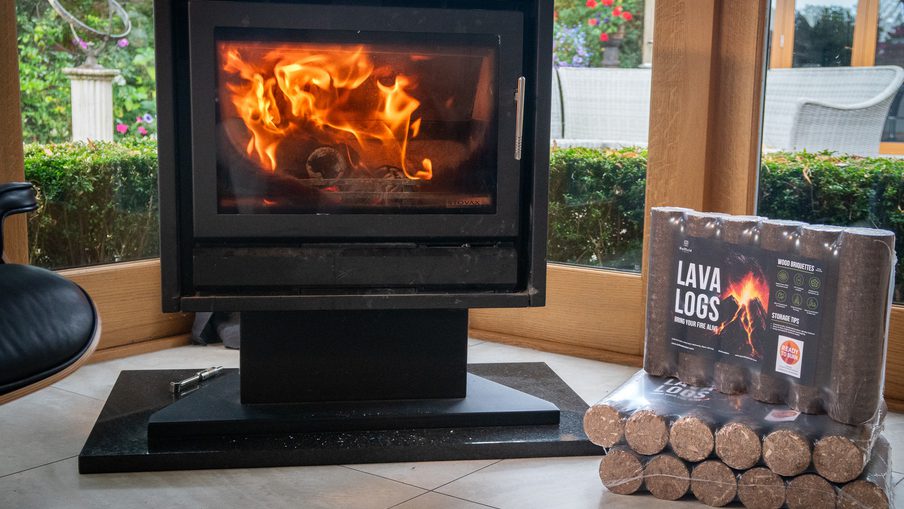
At Duffield Timber, we sell high-performance wood briquettes, Lava Logs, manufactured at our factory from 100% recycled wood by-products.
Didn't find the answer you were looking for? Ask us and we'll get back to you as soon as possible.
Submit your wood briquettes question


